
 99 Nights in the Forest · Survival
99 Nights Food and Fuel Checklist
Estimate remaining nights, party consumption and safety reserves for a more reliable forest run.
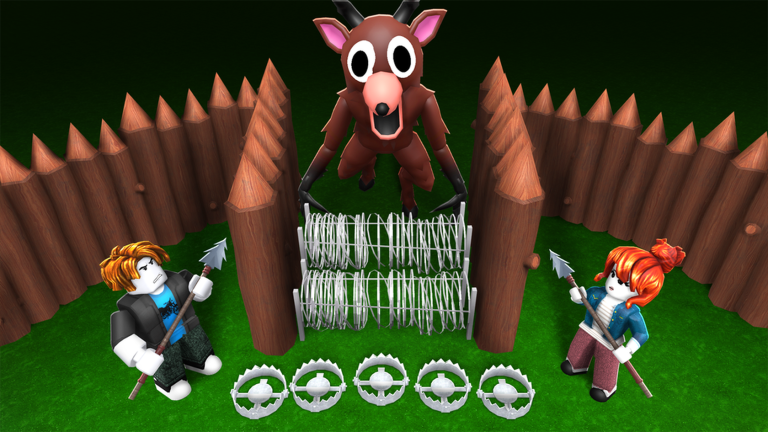
A survival plan fails when it treats the target night as the only number that matters. Party size, actual burn rate, travel, crafting and recovery all change the resources required to reach it.
Measure consumption across several ordinary nights, then add a reserve for difficult segments instead of inventing one perfect rate.
The useful version in one minute
Measure per-night use.
Scale food by active players.
Keep emergency fuel separate.
Recalculate after losses or route changes.
Calculate nights remaining first
Subtract the current night from the target and verify whether the current segment is already supplied. Small off-by-one errors become large when multiplied by the whole party.
If your route includes optional exploration, add the expected delay before calculating food and fuel.
Build a two-layer reserve
Keep an operating supply for the planned nights and a smaller emergency reserve that is not used for routine crafting. This makes the buffer visible instead of hiding it in a rounded total.
The reserve should reflect actual risks: slower travel, recovery, extra players or a failed objective.
Replan when the party changes
A player leaving can reduce food use while also slowing collection and defense. Recalculate both consumption and workload rather than assuming the run automatically becomes easier.
After a major loss, count the remaining materials before choosing the next objective.
How to apply this 99 Nights in the Forest guide with confidence
A 99 Nights in the Forest run is a resource plan under uncertainty. Food, fuel, party size, travel time, rescue goals and unexpected delays interact, so a single best-case total is not enough. Separate required consumption from the safety reserve and describe the conditions that would cause the group to turn back, gather more supplies or change objectives.
A strong survival resource planning workflow does more than produce a number. It preserves the inputs, explains the tradeoff and gives you a repeatable check when the game, your inventory or your goal changes. Use the sections below as a working notebook for 99 Nights Food and Fuel Checklist, and update the baseline whenever new evidence replaces an assumption.
01 Establish a reliable baseline
Measure consumption over several ordinary day-and-night cycles rather than one unusually calm or chaotic interval. Record the party size and any role that changes gathering or usage. Use the observed average as the baseline, then add a reserve for detours, missed pickups and emergency recovery instead of hiding those risks inside an unexplained round number.
Before entering anything, copy the relevant values exactly as the game displays them. Include the mode, platform, version and any active boosts or variants that can change the outcome. Save the first result before experimenting. That untouched baseline gives every later comparison a stable reference and makes input mistakes much easier to spot.
When a value is unknown, label it as an estimate and test a low and high case. Do not hide uncertainty behind extra decimal places. A transparent range is more useful than a precise-looking answer built from an unsupported assumption.
02 Compare options instead of chasing one score
Calculate the minimum consumption for the objective, then add a separate emergency reserve. Assign responsibility for gathering, transport and monitoring so the group can see when the plan is drifting. The reserve should have a trigger, such as turning back or dropping a secondary objective, rather than being spent without discussion.
Create at least two realistic alternatives: the plan you can execute with current resources and the upgrade you are considering. Change one important input at a time, then write down what improved and what became worse. This prevents several simultaneous changes from receiving credit for the same improvement.
Look beyond the headline total. Time, reversibility, resource cost, risk and personal goals can change which option is actually better. The calculator provides structure for that decision; it does not remove the need to read the live game state.
03 Avoid the mistakes that create misleading answers
A best-case consumption rate ignores travel delays, mistakes and uneven party participation. Another common error is counting resources that are not yet secured. Keep inventory on hand separate from expected pickups and revise the plan when the observed burn rate exceeds the baseline.
Also check units and naming. Levels are not always total experience, percentages are not always multipliers, and two similarly named items may be different variants. If the result looks dramatically different from the game, assume an input or rule mismatch first. Re-enter the smallest possible example and confirm each step before restoring the full scenario.
Do not average incompatible sources merely to make them agree. Prefer the newest authoritative source for fixed mechanics and clearly dated community evidence for player-driven markets. Record which source supports each change so an update can be corrected without rebuilding the guide from memory.
04 Recheck the plan after updates
Updates, difficulty settings and group composition can change how quickly supplies disappear. Recheck a short sample at the start of a new run and update the calculator when the measured rate differs. A checklist should support situational judgment: it cannot predict every encounter, map layout or decision made by other players.
Run a short control test after a major patch, season change or balance update. Use the same inputs as a saved baseline and compare the result with the current game. If the difference is repeatable, identify the smallest rule that explains it and update only that assumption. This is faster and safer than replacing every value at once.
Pay attention to dates on guides, videos and spreadsheets. A popular result can still describe an older version. When official notes are incomplete, mark the finding as observed and keep the test conditions visible until several independent repetitions support a firmer conclusion.
05 Work through a practical scenario
A party may appear to have enough fuel for the planned nights when only the ideal burn rate is considered. If one member spends extra time away from camp or the route produces fewer pickups, that plan fails early. Adding a visible reserve makes the tradeoff clear and lets the group decide whether another objective is worth consuming it.
Start the worked example with the current state, not the desired result. Enter the baseline, duplicate it as a second scenario and modify only the decision being tested. Compare the difference, calculate the cost of the change and ask what would make the choice fail. If the plan still works under a conservative assumption, it is more likely to survive normal gameplay variation.
A strong survival plan provides clear checkpoints: supplies remaining, nights or stages left, reserve status and the next safe decision. It reduces argument during pressure because the group agreed in advance which objective is optional and when the run should change course.
Final two-minute review
- Are the game mode, version, platform and important variants recorded?
- Did you preserve the original baseline before changing inputs?
- Is every estimate labeled and tested as a range?
- Did you compare the complete cost, risk and usefulness of each option?
- Can you explain what new evidence would change the recommendation?
99 Nights in the Forest checklist
Work through the list in order, then revisit the assumptions that changed.
- 1Confirm current and target night.
- 2Count active players.
- 3Measure food use per player per night.
- 4Measure fuel use per night.
- 5Add an explicit safety percentage.
- 6Recalculate after a route or party change.
99 Nights calculator FAQs
Clear answers about calculations, data, independence, privacy and practical use.
How much food do I need for 99 Nights?
Multiply nights remaining by active players and your measured meals per player per night, then add a visible reserve.
How large should the fuel reserve be?
Base it on the run’s uncertainty. A familiar route needs less buffer than exploration with frequent delays.
Does a smaller party always need fewer resources?
It often consumes less food, but slower collection and higher individual workload can increase risk and delay.
When should I recalculate?
After a player change, major item loss, route change or unusually high consumption period.
Related calculators
99 Nights Characters
Search survival role profiles and compare their planning strengths.
99 Nights Class Comparison
Compare two survival loadouts across utility, cost and rating.
99 Nights Crafting Calculator
Calculate complete crafts, consumed resources and leftovers.
99 Nights Fuel Calculator
Estimate fuel needed for the remaining nights with a safety reserve.